Free Shadowdark Adventure: Descent to Thargrond

Shadowdark is quickly becoming my favorite TTRPG. Its simplicity makes homebrewing easy without breaking balance. It also addresses by biggest issue with 5e, it actually rewards treasure hunting, since PCs must earn gold to advance.

Whenever I learn a new system (the curse of being a forever GM), I build an adventure for it. This is one of two I’ve created for Shadowdark. This one is inspired by classic OSR dungeons where rival factions vie for dominance in the dark. For good measure, I added an ancient dwarven city, long fallen, now ruled by a necromancer. The necromancer manipulates the factions into destroying one another so he can swell his undead ranks.

The main inspirations for this dungeon are Caves of Chaos—the 5e remake of Keep on the Borderlands—and Barrowmaze. Running Caves of Chaos in the past led to some truly memorable player–monster alliances. Olly the Orc and Harry the Hobgoblin will live in infamy in my group (I needed names on the fly,I was expecting a fight, not a parlay!). The players even taught them the value of trade over conquest.

From Barrowmaze, I borrowed the idea of the mongrelmen and created a race of mutant humanoids adapted to survive the dangers of the dark.

Without further ado, here’s the back-cover summary and player pitch I use when running this dungeon in one-shots. Download the full adventure below.


Adventure Summary

Descend into a living dungeon, where every alliance is fragile and every victory feeds the darkness.

When monsters erupt from the depths beneath the village of Umberstead, desperate defenders pursue them into the caverns below. The tunnels once led to the dwarven city of Thargrond, but now form a labyrinth of warring factions and restless dead. In the heart of Thargrond, a necromancer known as the Pale Warden desecrates the city’s ruins, feeding on the chaos he’s sown and growing stronger with every fallen soul.


Player Pitch

Umberstead is under siege.
Strange mutant creatures have fled from the depths—what horrors drove them to the surface? Fight beside the villagers, then descend into a cavernous underworld where rival factions clash for survival, unaware they stand between you and something far worse.

Feedback or other comments: reach out at worldsbywally@gmail.com, or find me on Threads.

Hope y’all enjoy it!

Prep for Confidence, not Content.

There is a lot of advice out there on preparation. I feel like it centers on telling people not to overprep. While this is helpful advice it misses the point. If someone is looking for advice on how to DM, being told to make a loose outline and not over focus on prepping isn’t super helpful!

However, the advice isn’t wrong. I just think it’s missing a key caveat, you prep to make yourself confident not to just create content. The content ultimately becomes an outline that is sometimes followed and sometimes not. Once you feel comfortable with the situation, you can run it and react to anything the players throw at you. I’ve ran the same adventures for numerous groups and it’s amazing how different the experiences can be. Seeing how different groups create different stories has become one of my favorite parts of running games.

So, how do you prep for confidence?

For me, it’s lists and questions. Lists provide a loose outline to remind me of the key things I want to include in the story. The questions help because they give me practice thinking about what might happen. There really is no replacement for just trying. Preparation is less about making what you’ll use in the session, than it is about helping you understand the world you’re running, or the rules you want to use.

Of course, you also hope to use the content you prepare! Most of the time when something is skipped, it can be adapted and placed somewhere else though. So very little prep is ever wasted.

It’s also worth remembering that your players will likely give you plenty to react to. Depending on the group, I’ve had entire sessions consumed by the riffing of the players’ reactions.

So, focus on understanding the obstacles you’ve built. Why they are there, and how the NPCs will react.

So, what should I prep?

Ultimately, TTRPGs are a combination of tactical challenges and group story telling. I tend to do detailed prep for the tactical challenges, and loose prep for the storytelling. The main exception being for epic lore reveals.

Tactical challenges (encounters, traps, puzzles) are easy to shift around and “re-skin” as needed. This makes the more detailed and time-consuming prep for them unlikely to be wasted. This includes things like preparing combat (check out The Monsters Know What They’re Doing), or making stats for encounters. I often find that players come up with creative ways to avoid tactical challenges, and I tend to reward that. After all, I can often re-use that prep for a similar encounter later.

The storytelling, overtime, becomes easy to jointly improvise with your players. For this, I occasionally prep a detailed monologue, but even then, I don’t usually read it. Preparing it lets me know what the NPC is thinking and what I need to convey. Most of my story prep, involves making a list of things that are happening. Then adding in a few potential forks to prepare for the unexpected.

Mostly, focus on prepping enough content to get things started. Give the players something to react to, and often that is sufficient. Of course, until you’ve done this you won’t fully realize you’ve prepped enough to be confident.

Ok great, what does this look like?

I wish there was a super simple answer to this. But, I’ll share a checklist you can go through. I have also included a sample bullet-point outline, for my latest session Split Paths. I also recently did this in depth blog post on a one-shot I ran.

If you have answers to the following questions, you’ll probably have a great session.

  • Do I know where the players are starting, and where I hope they’ll go?
  • Have I identified the biggest decisions the players need to make? What are the obvious options?
  • What are the “meaningful” choices I’m providing, that may materially alter the story?
  • Have I asked myself what I’ll do if they go off course, or get stuck? (It’s ok if they do, but be ready for it!)
    • Sometimes I have a few random side-quest style items prepared for that, just in case.
  • Have I looked at the stats and key abilities of the main tactical encounters (e.g., Monsters or Traps)? Do I know how to run their abilities?
  • Have I reviewed any obscure rules that are likely to come up? (e.g., How does jumping work if I’m including a chasm they need to cross.)
  • For NPCs. You can look up articles about writing and ask questions they suggest. Here are a few important ones to consider. Above all, what are their motivations?
    • Why are they included?
    • What are their goals?
    • What are they willing to give to achieve their goals? What are their limits?
    • Are there any important relationships between the NPCs to consider?

Here’s an example bullet point adventure outline. You can see, many of the bullet points are answers to questions. My main goal was to wrap up the Anahera-Tepiti romance arc and kick off the real Journey to Hawaiki. The meaningful choices really determine if Anahera gets kidnapped, and when/where the PCs could intercept her kidnappers.

It has forks, redundancy, and meaningful player choices. But those are topics for another day.

  1. Anahera calls in the PCs and asks for them to help her contact her ancestors. Two options are provided.
    1. A newcomer to the island tells the heroes to steal a Drum from the Ponaturi.
    2. Anahera asks the PCs to sail to the underworld, to show her ancestors how to reach this new island.
  2. Explore the island and decide on the path.
    1. Encounter Tepiti. Tepiti will be trying to regain Anahera’s trust. Secure the island, perhaps want a way to foresee the future.
      1. How could this happen?
        1. Need to find a legend of a god willing to help with this.
        2. Find a way to appease the god. But, this will require striking a dangerous deal. This, would lead Anahera to exile Tepiti if she found out. Make it clear it’s desperation.
          1. Do they help, tell Anahera?
          2. Do they help Tepiti? Will helping Tepiti also help Anahera?
  3. Option 1: Head to the Ponaturi.
    1. Sail there.
    2. Steal a drum.
      1. Emphasize what’s known about Ponaturi. Option to sneak up at night, or hide during the day.
      2. Potentially make the Goblins seem like harmless pranksters?
    3. Return.
    4. Give drum. In the evening, a party will be thrown. Hone-hine’s allies will kidnap the princess as spirits assault the village.
  4. Option 2:
    1. Sail to underworld entrance.
    2. Sneak in.
    3. Maze of survival. (Use table of potential encounters). Skill challenge again.
      • Roll Survive in form of a skill challenge. 4 times. DC 8. Describe what happens pass or fail to give all the rolls a feel of consequence and progress.
      • Find an ancestor.
      • Return.
      • Anahera kidnapping attempt must be far more brazen than with the distraction of the drums.
  5. Option 3:
    • Sail to Isle of prophecy.
    • Peer into the mirror of reflection.
    • Return to island.
    • Deal with Anahera kidnapping as in Option 2.
  6. What if Hone-hine’s plot is discovered before leaving the island?
    1. (5) will occur slightly more quickly.
    2. Shift to (3), but under a pretense that something else is a-miss.
  7. If Anahera is kidnapped.
    1. Track her down across island.
    2. Evidence of Pakongans.
    3. Sail either to Pakonga or Ngaru.
    4. Race at sea, then up the mountain.
  8. If Anahera is not kidnapped
    1. Players are encouraged to ensure Pakongans do not escape
  9. Counsel with surviving leader(s)
    1. What can we do to secure our fragile position here? First Sirens, then the Pakongans attempt revenge?
      1. Kahuna: Perhaps we need to gain the blessing of a god.
      2. Other Kahuna: Or the protection of our ancestors.
      3. Tepiti: Was this perhaps not our final stop? I still feel the call to voyage.
      4. Anahera: I had thought it bad luck perhaps we shared the island.
      5. Tepiti: Marry me, then what is mine becomes yours. We both brought with us dangerous paths, and together we have overcome them. Let us unite our people.

The rest of my prep was putting together stats and encounter tables. But that’s more because this adventure is built to playtest Journey of the Wayfinder.

For some bullet points, I reviewed game rules. For example, for “Race at sea,” I reviewed how chases work.

For the two main NPCs, I can summarize all I needed in two sentences. (1) Anahera is focused on securing the island and becoming a queen. (2) Tepiti is entranced with Anahera, but it’s fading, and he feels the call of the seas again.

Their basic motivations can guide their actions, and in this case also outline the next chapter of the adventure. Tepiti will need heroes to help him on his next journey.

How did this work out?

I don’t think I’ve ever prepped something and remembered everything. This is true even with my outline in front of me, I get engrossed in the story telling. This time was no different.

The players decided to head too the reflecting pool first, then proceed to the underworld. Using the outline, I was able to easily improvise unique prophecies based on what the players sacrificed and shared.

I also changed the ending a little. Because the players had Tepiti with them when they rescued Anahera. The adventure started with the NPCs mistrusting one-another, but ended with an emotional departure scene.

Tepiti’s motivation to continue his journey, outweighed his infatuation. He recruited the PCs to help, seeding the next adventure. I also did a throwback to earlier interactions the PCs witnessed. A bet between Tepiti and Anahera on who would reach the island first, where Tepiti had hoped to win a date. Tepiti suggested the bet wasn’t lost yet, cause this wasn’t the island he sought.

That was a really memorable moment, totally improvised. It happened because I knew the basic motivations for the NPCs.

Running games is great for building confidence generally.

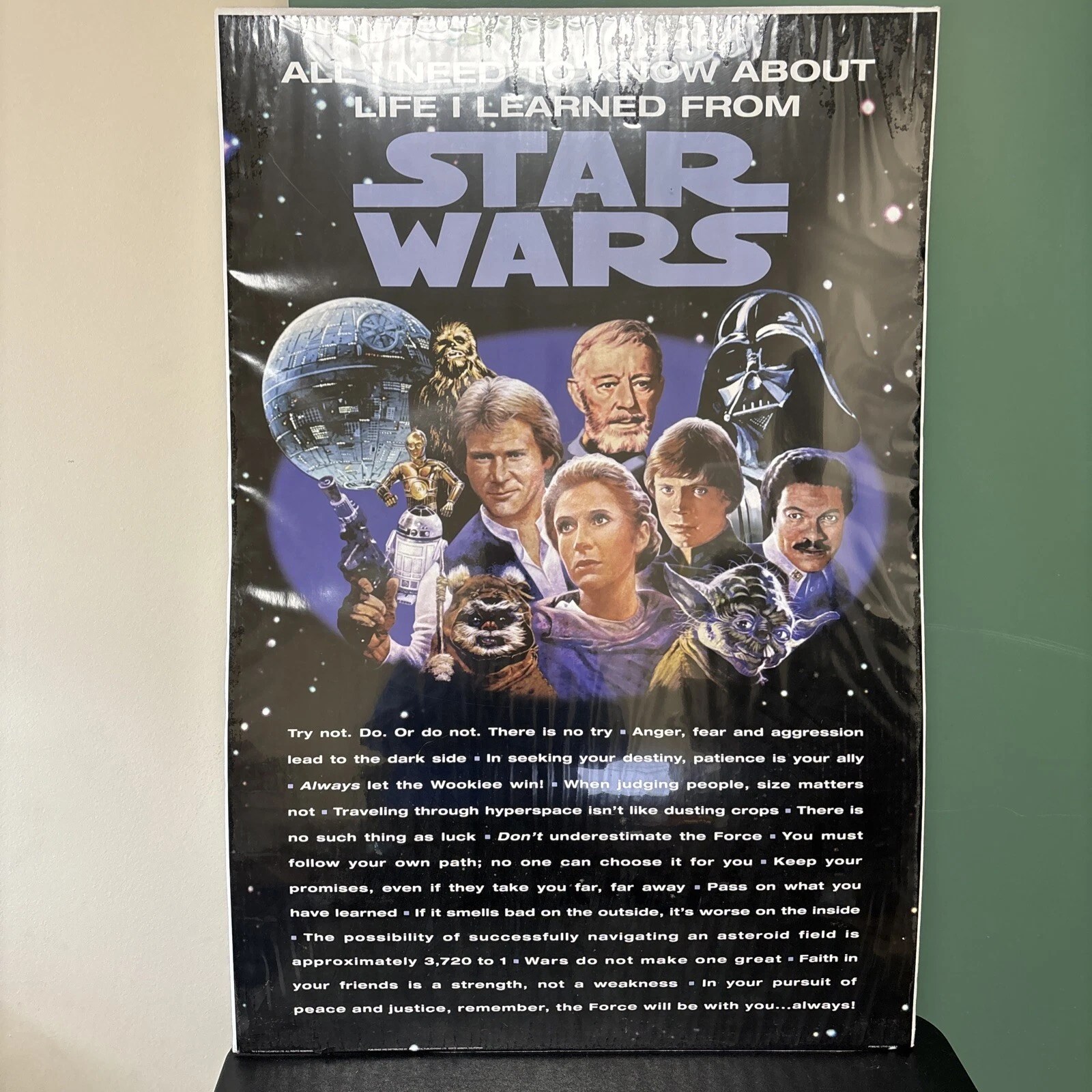
It reminds me of a silly poster I had in my room as a kid, “All you need to learn about life I learned from Star Wars.” But really, I think it would have been better if it said from DMing Dungeons and Dragons.

Image from Ebay.

I was always socially anxious, but overtime running games helped me learn to improvise and trust my gut. This helped with confidence in all aspects of life. I think you’ll find it gets easier overtime, and that you require less and less preparation to feel confident. It’s also super rewarding to see how much many players appreciate the effort.

So, prep loosely or whatever. But really, prep enough to make yourself *feel* ready, whatever that amount is.

Scabard Product Review.

Scabard RPG Campaign Manager

Rating:

19, Near Crit!

Pros

  • Simple to use wiki format.
  • Easy to share with players, and keep secrets hidden.
  • Proper Noun Detector automatically links pages. Aiding world development.
  • Rich set of connections to define and track relationships.
  • Affordable plans ranging from free to $19.95/month.
  • Very responsive developer seeks community feedback and quickly addresses issues.

Cons

  • Many key features are pay-walled, and most new features are in the most expensive plan.
  • Proper Noun Detector could use auto-complete (does have an ex-post AKA/alias option for linking).
  • Could use a non-GM comment capability to allow players to comment on pages too. Although, there are some features to allow players to add to the campaign.

I’ve wanted to start product reviews for a while, and I have a few more in mind. I’m going to start with some of my favorite resources for DMing. I’d love to see these products supported so they continue. This page does not contain any affiliate links.

Why Scabard?

Scabard helps me with my biggest problem as a DM, keeping details and campaign notes well organized.

This is especially true for long-running campaigns, and often the problem is exacerbated by intermittent breaks. Over the years I’ve tried numerous strategies for this. I have a closet full of binders with notes from past campaigns, countless OneNote and Word documents, custom software like RealmWorks (now deprecated), and multiple tools to store hand-written notes (RocketBook and a Kindle Scribe).

A small fraction of my notebooks, along with my RocketBook and Kindle Scribe

While I will never move away from using other tools for ideation and informal notes, Scabard is my go to campaign manager. Check out the campaign I’ve been playing for the last year, Bishou. More about it later.

Glancing through pages, you can see I have added many types of resources. Maps, images, notes, and more. I even create blank placeholder pages as well, often minor NPCs like this one. Sometimes, the blank pages contain secrets I haven’t yet shared with my players, other times they are reminders for me to write more later. After each gaming session, I publish a summary that I review those before sessions.

There are two features that make me keep returning to this tool time and time again. First, the simple wiki-style layout that can be shared directly with the players. Second, the Proper Noun Detector with Auto-Linking.

These two features provide the core functionality that I use most frequently. There isn’t a lot to say about the wiki-style layout.

Overall, the platform provides a simple page-layout and categories you can assign each page to. This places the pages within groups and provides some simple linking capabilities across the pages. These links appear on the right-hand side of the page. They can also be hidden by the Campaign Owner if you need to keep them a secret.

You can also click a simple check-box on any page to hide the entire page from the players.

What’s so cool about Noun Detection?

I firmly buy into the type of world building where you spin outwards from a starting point. The proper noun detector is a dangerous rabbit hole for me. It helps you quickly create pages for every proper noun it detects and automatically links to those you already have. It tries to identify similarly named pages and provides an option to use them as an alias. Aliases function as a list of names that will also link to that page.

My one critique is that I wish it was easier to reduce the list of nouns it detects and help with spelling errors. This may be an issue for me because I use google translate to create hard to remember names.

What would make this tool better?

Overtime, I have had to upgrade my subscription just to keep all my older campaigns. I don’t mind because I love supporting the tools development but the next tier is $19.95/month (or 25% off if purchased annually), and that is pricey.

I’d love a way for players to comment on pages. In my current campaign, my players often link or quote things in our discord server. It would be great if they could do this directly on the blog without being added as a GM.

Finally, I’d love an auto-complete option for the proper noun detector. Although, if I had it I would complain it’s always trying to change words like it does on my phone! That complaint is certainly nitpicky.

What haven’t I tried?

I subscribe to their legend tier, because I have years of campaigns saved on the tool and keep adding more. But, this means I haven’t tried many of the enhanced AI features. I’ll eventually write a post on my opinions of AI, so I’ll leave that for another discussion. Still, there are a lot of features in the Mythic tier that seem like they could be super useful. I find the tool more than sufficient at the lower tiers.

Power Players. This might solve my player comment problem. But it gives slightly more control to players than I’m looking for, and I find it difficult to get players to take actions outside of the game.

Song of the Sirens

Recently my focus has been on revisions for two upcoming publications, Mysteries in Elanysia and Echoes of the Void. For the first one, I have some commissioned art now and I AM EXCITED! This has put work on my Polynesian game Journey of the Wayfinder on the back-burner.

For my next one-shot, Song of the Sirens, I went deep on original lore for the main enemy. The lore came from trying to answer a simple question, “If the PCs wanted to strike a bargain with the Sirens what would they need to provide?” The answer came quickly, a new song from the gods. This led me to ask, why?

That why became a myth. It’s inspiration is as much Greek tragedy as it is Polynesian. After all I’ve been reading Greek myths since I was a kid. Hopefully I’ve managed to capture a bit of the spirit of Polynesian Myths as well. The legend follows below:

              There was once a beautiful Arioi named Moatangi, whose performances were a mesmerizing array of dancing on water and singing. She’d climb the mast of her canoe, belt songs swinging from the ropes, dive into the sea, and swim back continuing her song until she emerged from the water to finish her ballad as she walked ashore. Over time these acts grew in grandeur. Sometimes she involved dozens of vessels in the act. Lower ranked Arioi would swim in unison, and a chorus of singers, dancers, and musicians accompanied her.

              Her performances eventually attracted the attention of Tavahanu, voice of the wind. At first, he listened silently. The stillness of the wind while he listened provided a quiet backdrop which emphasized the grandeur of her performance. Then, Tavahanu began to carry Moatangi’s songs farther, emboldening the fortes and muting the pianos. Over time, she replaced some of her accompaniment with the sounds of nature. Learning, if only subconsciously, how to leverage the songs of nature. As she sang, the wind would carry the melody of birds, the song of palm fronds swaying in the winds, or the violent echoes of the wind wailing through hollow passages.

              One night as she slept under the stars on the beach, she awoke to a whistling sound leading inland. Thinking she heard the echo of her name on the wind, she followed the sound. Eventually, she found its source to be a cave and heard the most beautiful array of nature’s melodies ever.

The cave was the perfect instrument for the wind. A thousand hollowed out caverns of different shapes and sizes allowing the wind to create a symphony of noises, replicating any sound imaginable. Tavahanu filled the cave with music and Moatangi began to sing a melody to the tune. Her song was a love ballad, like the world had never heard. Starting with the eternal embrace of Rangi and Papa, telling of the one-sided love of Hina and Tuna, the near tragedy of Hinemoa and Tūtānekai, and continuing with all the love stories of the gods.

              Throughout the night islanders were stirred awake by the music. They were mesmerized by the sounds and found themselves compelled to move towards the music. Enraptured by the music everyone who came stayed the entire night. Moatangi never looked outside the cave. She was overcome by the feelings she attempted to express through the ballad she sang. Having finally found the melody within her soul.

              As the sun began to rise the Arioi’s voice broke. Her music stopped, and finally she whispered. “What are you to make such beautiful songs, I have seen nothing all night as I accompanied you? My voice but a back-up singer to the melody of love itself.”

              The wind replied, “Moatangi, you are mistaken. The tune comes from your heart, I but listen and play it so you can sing. I am Tavahanu, voice of the wind. Stay here with me for nowhere else can I come close to echoing the beauty of your voice. No where else can I make all sounds that can be heard by man. Long I have tried to lead you here.”

               She paused for a long moment, puzzled by the statement. For nothing has freedom like the wind. Blowing over land and sea, touching both the heavens and the earth. Finally, she replied, “Anywhere can the wind move, why can you not make these sounds elsewhere?”

              Tavahanu explained that although he can move anywhere the wind can, the wind has no voice of its own. The wind plays nature like the Arioi play their instruments. Tavahanu replied, “The whole world is my instrument, but nowhere else can I play such a symphony in one place.”

              As the two conversed, the magic of the music faded. The compulsion over those watching faded, and the crowd began to murmur and ask questions. Only then did Moatangi notice the audience. For her also the compulsion began to fade, and her own wits began to return. Realizing how long she sang, wondering how long people had listened, she considered what singing with Tavahanu could achieve. She glanced down at her painted leg, a symbol of her reaching the pinnacle of status among the Arioi. Realizing singing with a god, could make the black leg seem pale in comparison.

              She considered the winds response and finally responded herself. “Could you not use me?”        

              In this part, the legends vary. Some say the wind filled her lungs. Others say she would wear ostentatious outfits of shells so the wind could make a symphony of sounds. Most say the wind made love to her, using her to make the sounds. Regardless of the truth, the pair traveled together from island to island putting on legendary performances. Captivating all who listened, even playing for and captivating the gods. The stories also agree that eventually, she carried a child.

              Unfortunately, while Tavahanu could father a child. He could not be a child’s father. For a while, the performances stopped as the Arioi cared for the newborn. But the wind kept blowing. Sometimes visiting, but being carried away for longer and longer periods of time.

However, Moatangi had learned many of the wind’s secrets while they had sung together. One day when Moatangi needed help, she sung a song into the wind like that day at the cave. She used its tune to compel someone’s attention, and continued to refine it until she compelled them to help her.

               Moatangi continued to master this skill, compelling others to do her bidding. It started with small favors. Preparing food, launching her boat, caring for her child while she swam. But overtime she would push the limits. She began to compel people to follow her, to rule their minds completely. Sometimes the wind returned, but most times it simply passed through.

              Still during this time her fame and renown had grown so much that gods commonly frequented her performances. But she longed for Tavahanu. She began to test her compulsion on the gods themselves. Small things at first, hoping to compel the wind to stay. With the wind, while she could keep its attention, it would never stop blowing for long. Even though Tavahanu loved her he simply couldn’t stay.

              One day, she was performing on an island far in the west. At the source of Mātāhiti Apatoa (the east wind). She realized if she could capture this wind, she could keep Tavahanu with her. She put on her most brilliant performance yet, and captivated Tahwhiri’s children. Eventually,  Tahwhiri god of storms and winds, realized his children were missing. Asking the other gods he learned of Moatangi. He requested the help of Tangoroa, knowing he needed to send Moatangi into the depths that he and his offspring could not reach.

              Together, Tahwhiri and Tangaora approached the island in a hurricane of destruction. Tahwhiri appeared before Moatangi and said, “Never shall you set shore upon the lands of man again, forever shall you be bound to sea. Where Tavahanu cannot go.”

              Then Moatangi flopped over, splashing into the water. She attempted to stand but found her legs had merged, and her bottom half looked like a fish. Confused and frightened she flopped about in the water. Her appearance had become deformed and hidous. After that, whenever she found a new audience, they ran from her in fear. The only way she could keep an audience, was to compel them.  

So, whenever she sees men, she sings her song and drags them into the sea with her. All the while craving the attention of Tavahanu, who could not come with her. She swam from island to island, looking for caves, hoping to find Tavahanu once again.

              With Moatangi beneath the sea, Tavahanu howls across the sea singing a sad song of mourning searching for her. To this day, he still does. Moatangi’s children can often be found, singing their compelling songs and luring men to the depths with them. Usually near caves, where they find a strange appeal to the howling of the wind through the caverns.

              This is how Sirens came to be, and why they sing their songs to lure men to their deaths. Creating a captive audience in remembrance of audiences they never knew.
Gen Con 2025!!!

I submitted my events for Gen Con 2025 today. My goal is to have all five of these adventures published or at least ready for publication by then. Two are part of the Journey to Hawaiki series. Those will include appendices with new rules.

I’ll update this post with links and description changes as the sessions are approved.

Dead Rising! – Pathfinder 2e.

Time: Friday August 1st 9AM.

In the small village of Vasuda, people have gone missing, and undead sightings are causing panic! Find the source of the undead, conquer the dungeon, and save Vasuda!

This short adventure has two parts. The first part of the adventure will be focused on role-playing as you investigate the recent disappearances and undead sightings to find out where they came from. If all goes well, the party should embark on a short dungeon crawl filled with traps, puzzles, and of course, undead.

In the small village of Vasuda, people have gone missing, and undead sightings are causing panic! Find the source of the undead, conquer the dungeon, and save Vasuda! Enjoy a little roleplay before embarking on an undead dungeon crawl!

Isles of Intrigue – Worlds Without Number

Friday August 1st, 2PM.

There’s a delicate power balance, three islands, alliance breaking, political marriages, and island adventures. You’ll face mythological dangers on the high seas. Save the island and prevent a war!

This is political intrigue set in Ancient Polynesia. The adventure provides a balance of roleplay and combat opportunities, with it up to the players when to apply which techniques. Each player will begin at 1st level. In addition to the core WWN rules, the game introduces new mechanics for wayfinding (sailing between islands) and divine intervention in addition to the core rules. The rules will feel familiar if you played any classic RPGs.

War or Peace in the Ancient Pacific -Worlds Without Number

Saturday August 2nd, 9 AM

Embark on a stealthy scouting mission and use subterfuge, sabotage, or direct force to save your island. Your chief urges caution while his advisor warns of dangers that need to be ended.

You’ll play a group of 1st level heroes. You’re in Ancient Polynesia and your island’s chief expects a nearby island to make an aggressive strike soon. He’s recruited the island’s bravest adventurers to scout out the enemy territory. In addition to the core WWN rules, we introduce new mechanics for wayfinding (sailing between islands) and divine intervention. Overall, the rule set will feel familiar if you played any classic RPGs.

The adventure provides a balance of roleplay and combat opportunities, with it up to the players when to apply which techniques.

Echoes of the Void – Stars Without Number

Saturday August 2nd, 2PM

Save a neuroscientist of galactic fame! Investigations so far led to a series of dead ends, until his wife received a cryptic message to send a crew. Can you save Dr. Ohno, or will you disappear too?

You’ll play a group of 1st level heroes. The adventure will begin as you meet his wife, Debra Walford. She describes a series of dead ends and disappearances associated with people who have investigated her husband’s disappearance. She received a message saying to send a crew and purchased passage for your group to investigate. The adventure provides opportunities for combat and roleplaying.

Mystery in Elanysia! – Pathfinder 2e

Sunday August 3rd, 9AM

Imps in the World’s safest city! Two wizards are under investigation for a series of robberies involving Imps and have hired you to help clear their name.

This adventure focuses on solving the mystery, starting with a chance to talk to witnesses of the three recent crimes. The first half will be heavily skewed towards roleplay, with the second part involving a short dungeon crawl.

Upcoming Publications!

The post title might be a little ahead of itself. But I’ve got two adventures for the without number series ready (one for worlds, one for stars). Now, I’m looking for play testers. I want feedback from both players and GMs. I’m thinking about starting a discord server to do play testing. If you’re interested, head over to my contacts page and reach out!

Echoes of the Void

Introduction: Dr. Ohno, A famous nuero-psientologist went on a short-term research assignment and went missing. His wife Debra started investigating his disappearance, and everyone she talked to started to go missing. A week ago, she received a cryptic message and hired the PCs to follow this clue to find her husband.

Shortly after taking the assignment, Dr. Ohno realized his research was intended to create psionic super-soldiers for a biotech megacorp. This bio-tech firm discovered a lost world with strange psionic properties. Not only did this lead to breakthroughs in psionic research, but the system’s position could completely change the sector’s economy by breaking up monopolistic trade routes. Realizing what was happening, Dr. Ohno attempted to sabotage the research and managed to leak a short cry for help to his wife Debra.

This adventure is a roughly four-hour adventure for 4-6 first level characters in Stars Without Number. It’s part of a longer campaign that I have outlined but haven’t been able to run in its entirety yet. I have run this part of the adventure a few times using SWN and Fantasy Flight’s Star Wars RPG. My plan is to publish the whole campaign in parts, making each module a standalone product.

The adventure starts on the most populous planet in the sector, with a chance for the PCs to follow up on the leads that turned into literal dead-ends for Debra. Then the PCs take a shuttle to a backwater space station to follow the message from Dr. Ohno.

On the space station the PCs get to the space station they’re able to acquire a ship, but it comes with some string attached in the form of a powerful new enemy. They’ll be pursued by local authorities as they leave the backwater space station. The players then end up at an abandoned research station, where Dr. Ohno was conducting research, in a unknown system. The station itself is basically a space dungeon, inhabited by aggressive robots and a torched psychic. Here they can piece together what happened, find Dr. Ohno (in the one-shot version), and realize how big an enemy they’ve made by taking this job.

Mystery in Elanysia

Introduction: Below the Tower of Arcana in the sprawling metropolis of Elanysia sits a seemingly endless maze of passages. For centuries the doors have been sealed shut, and in that time their purpose was long forgotten. Recently, a local thieves guild has taken up residence in these catacombs and allied themselves with forces they don’t fully comprehend, threatening to bring disaster to Elanysia.

This adventure is a dungeon I’ve placed in almost every campaign I’ve run. It’s inspired by the lost woods in the original Zelda game. The module is based on a one-shot version of the dungeon I put together while quarantining with Covid (it’s been sitting half-done for a while!) The adventure has the PCs following a series of robberies, where Imps provide a distraction while something valuable is stolen. Eventually, the PCs should figure out that George, and indebted gambling addict, is at the center of all events. Following him should lead the PCs to an endless dungeon maze where a local thieves’ guild has taken residence. Then the fun begins, as the PCs learn how to navigate the maze. They must stop the thieves’ guild from allowing a demon trapped in the maze from threatening the safety of Elanysia.