There is a lot of advice out there on preparation. I feel like it centers on telling people not to overprep. While this is helpful advice it misses the point. If someone is looking for advice on how to DM, being told to make a loose outline and not over focus on prepping isn’t super helpful!
However, the advice isn’t wrong. I just think it’s missing a key caveat, you prep to make yourself confident not to just create content. The content ultimately becomes an outline that is sometimes followed and sometimes not. Once you feel comfortable with the situation, you can run it and react to anything the players throw at you. I’ve ran the same adventures for numerous groups and it’s amazing how different the experiences can be. Seeing how different groups create different stories has become one of my favorite parts of running games.
So, how do you prep for confidence?
For me, it’s lists and questions. Lists provide a loose outline to remind me of the key things I want to include in the story. The questions help because they give me practice thinking about what might happen. There really is no replacement for just trying. Preparation is less about making what you’ll use in the session, than it is about helping you understand the world you’re running, or the rules you want to use.
Of course, you also hope to use the content you prepare! Most of the time when something is skipped, it can be adapted and placed somewhere else though. So very little prep is ever wasted.
It’s also worth remembering that your players will likely give you plenty to react to. Depending on the group, I’ve had entire sessions consumed by the riffing of the players’ reactions.
So, focus on understanding the obstacles you’ve built. Why they are there, and how the NPCs will react.
So, what should I prep?
Ultimately, TTRPGs are a combination of tactical challenges and group story telling. I tend to do detailed prep for the tactical challenges, and loose prep for the storytelling. The main exception being for epic lore reveals.
Tactical challenges (encounters, traps, puzzles) are easy to shift around and “re-skin” as needed. This makes the more detailed and time-consuming prep for them unlikely to be wasted. This includes things like preparing combat (check out The Monsters Know What They’re Doing), or making stats for encounters. I often find that players come up with creative ways to avoid tactical challenges, and I tend to reward that. After all, I can often re-use that prep for a similar encounter later.
The storytelling, overtime, becomes easy to jointly improvise with your players. For this, I occasionally prep a detailed monologue, but even then, I don’t usually read it. Preparing it lets me know what the NPC is thinking and what I need to convey. Most of my story prep, involves making a list of things that are happening. Then adding in a few potential forks to prepare for the unexpected.
Mostly, focus on prepping enough content to get things started. Give the players something to react to, and often that is sufficient. Of course, until you’ve done this you won’t fully realize you’ve prepped enough to be confident.
Ok great, what does this look like?
I wish there was a super simple answer to this. But, I’ll share a checklist you can go through. I have also included a sample bullet-point outline, for my latest session Split Paths. I also recently did this in depth blog post on a one-shot I ran.
If you have answers to the following questions, you’ll probably have a great session.
- Do I know where the players are starting, and where I hope they’ll go?
- Have I identified the biggest decisions the players need to make? What are the obvious options?
- What are the “meaningful” choices I’m providing, that may materially alter the story?
- Have I asked myself what I’ll do if they go off course, or get stuck? (It’s ok if they do, but be ready for it!)
- Sometimes I have a few random side-quest style items prepared for that, just in case.
- Have I looked at the stats and key abilities of the main tactical encounters (e.g., Monsters or Traps)? Do I know how to run their abilities?
- Have I reviewed any obscure rules that are likely to come up? (e.g., How does jumping work if I’m including a chasm they need to cross.)
- For NPCs. You can look up articles about writing and ask questions they suggest. Here are a few important ones to consider. Above all, what are their motivations?
- Why are they included?
- What are their goals?
- What are they willing to give to achieve their goals? What are their limits?
- Are there any important relationships between the NPCs to consider?
Here’s an example bullet point adventure outline. You can see, many of the bullet points are answers to questions. My main goal was to wrap up the Anahera-Tepiti romance arc and kick off the real Journey to Hawaiki. The meaningful choices really determine if Anahera gets kidnapped, and when/where the PCs could intercept her kidnappers.
It has forks, redundancy, and meaningful player choices. But those are topics for another day.
- Anahera calls in the PCs and asks for them to help her contact her ancestors. Two options are provided.
- A newcomer to the island tells the heroes to steal a Drum from the Ponaturi.
- Anahera asks the PCs to sail to the underworld, to show her ancestors how to reach this new island.
- Explore the island and decide on the path.
- Encounter Tepiti. Tepiti will be trying to regain Anahera’s trust. Secure the island, perhaps want a way to foresee the future.
- How could this happen?
- Need to find a legend of a god willing to help with this.
- Find a way to appease the god. But, this will require striking a dangerous deal. This, would lead Anahera to exile Tepiti if she found out. Make it clear it’s desperation.
- Do they help, tell Anahera?
- Do they help Tepiti? Will helping Tepiti also help Anahera?
- How could this happen?
- Encounter Tepiti. Tepiti will be trying to regain Anahera’s trust. Secure the island, perhaps want a way to foresee the future.
- Option 1: Head to the Ponaturi.
- Sail there.
- Steal a drum.
- Emphasize what’s known about Ponaturi. Option to sneak up at night, or hide during the day.
- Potentially make the Goblins seem like harmless pranksters?
- Return.
- Give drum. In the evening, a party will be thrown. Hone-hine’s allies will kidnap the princess as spirits assault the village.
- Option 2:
- Sail to underworld entrance.
- Sneak in.
- Maze of survival. (Use table of potential encounters). Skill challenge again.
- Roll Survive in form of a skill challenge. 4 times. DC 8. Describe what happens pass or fail to give all the rolls a feel of consequence and progress.
- Find an ancestor.
- Return.
- Anahera kidnapping attempt must be far more brazen than with the distraction of the drums.
- Option 3:
- Sail to Isle of prophecy.
- Peer into the mirror of reflection.
- Return to island.
- Deal with Anahera kidnapping as in Option 2.
- What if Hone-hine’s plot is discovered before leaving the island?
- (5) will occur slightly more quickly.
- Shift to (3), but under a pretense that something else is a-miss.
- If Anahera is kidnapped.
- Track her down across island.
- Evidence of Pakongans.
- Sail either to Pakonga or Ngaru.
- Race at sea, then up the mountain.
- If Anahera is not kidnapped
- Players are encouraged to ensure Pakongans do not escape
- Counsel with surviving leader(s)
- What can we do to secure our fragile position here? First Sirens, then the Pakongans attempt revenge?
- Kahuna: Perhaps we need to gain the blessing of a god.
- Other Kahuna: Or the protection of our ancestors.
- Tepiti: Was this perhaps not our final stop? I still feel the call to voyage.
- Anahera: I had thought it bad luck perhaps we shared the island.
- Tepiti: Marry me, then what is mine becomes yours. We both brought with us dangerous paths, and together we have overcome them. Let us unite our people.
- What can we do to secure our fragile position here? First Sirens, then the Pakongans attempt revenge?
The rest of my prep was putting together stats and encounter tables. But that’s more because this adventure is built to playtest Journey of the Wayfinder.
For some bullet points, I reviewed game rules. For example, for “Race at sea,” I reviewed how chases work.
For the two main NPCs, I can summarize all I needed in two sentences. (1) Anahera is focused on securing the island and becoming a queen. (2) Tepiti is entranced with Anahera, but it’s fading, and he feels the call of the seas again.
Their basic motivations can guide their actions, and in this case also outline the next chapter of the adventure. Tepiti will need heroes to help him on his next journey.
How did this work out?
I don’t think I’ve ever prepped something and remembered everything. This is true even with my outline in front of me, I get engrossed in the story telling. This time was no different.
The players decided to head too the reflecting pool first, then proceed to the underworld. Using the outline, I was able to easily improvise unique prophecies based on what the players sacrificed and shared.
I also changed the ending a little. Because the players had Tepiti with them when they rescued Anahera. The adventure started with the NPCs mistrusting one-another, but ended with an emotional departure scene.
Tepiti’s motivation to continue his journey, outweighed his infatuation. He recruited the PCs to help, seeding the next adventure. I also did a throwback to earlier interactions the PCs witnessed. A bet between Tepiti and Anahera on who would reach the island first, where Tepiti had hoped to win a date. Tepiti suggested the bet wasn’t lost yet, cause this wasn’t the island he sought.
That was a really memorable moment, totally improvised. It happened because I knew the basic motivations for the NPCs.
Running games is great for building confidence generally.
It reminds me of a silly poster I had in my room as a kid, “All you need to learn about life I learned from Star Wars.” But really, I think it would have been better if it said from DMing Dungeons and Dragons.
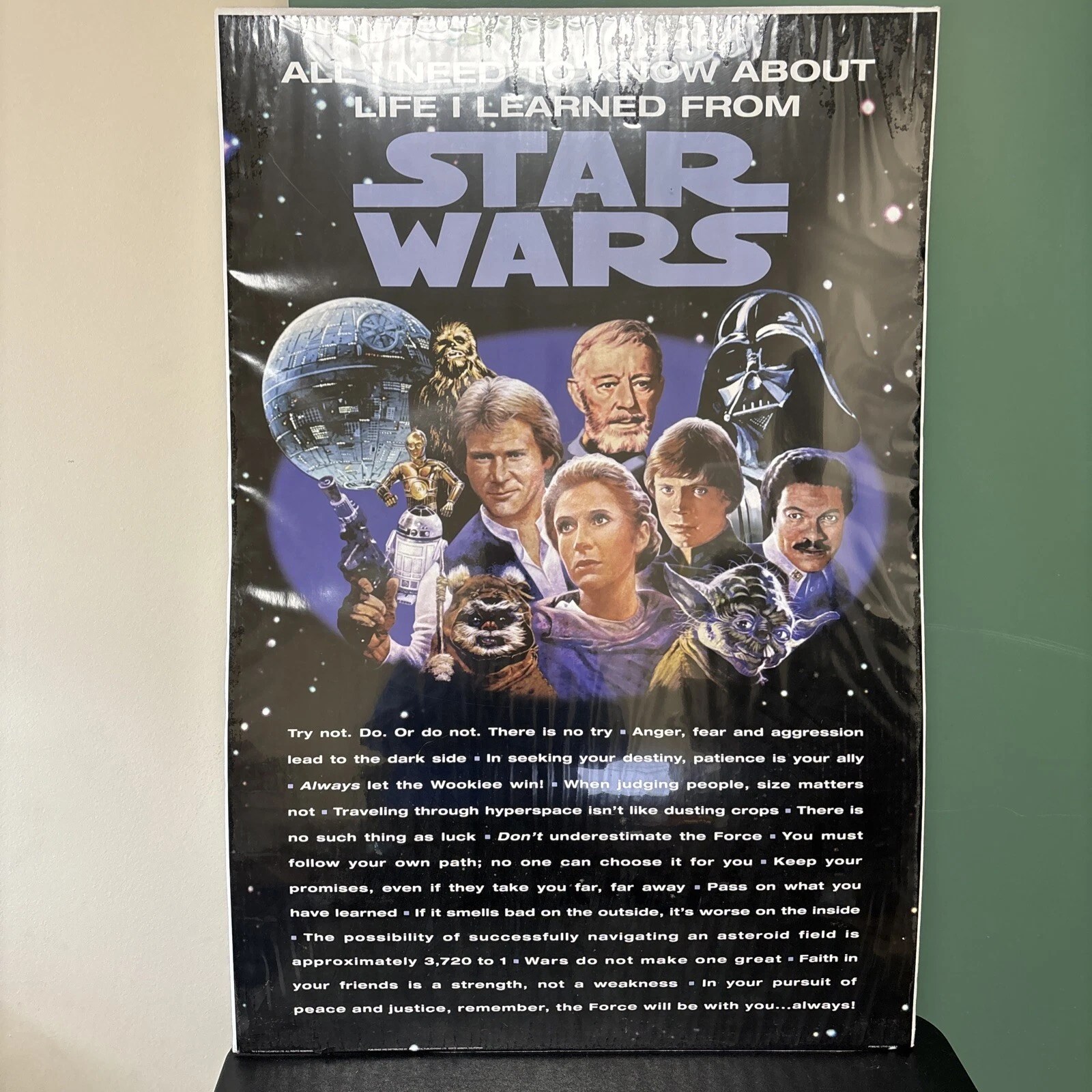
I was always socially anxious, but overtime running games helped me learn to improvise and trust my gut. This helped with confidence in all aspects of life. I think you’ll find it gets easier overtime, and that you require less and less preparation to feel confident. It’s also super rewarding to see how much many players appreciate the effort.
So, prep loosely or whatever. But really, prep enough to make yourself *feel* ready, whatever that amount is.
 Worlds by Wally